Side quests.
brookegpt.
The portfolio I built to prove I can build AI-native experiences.
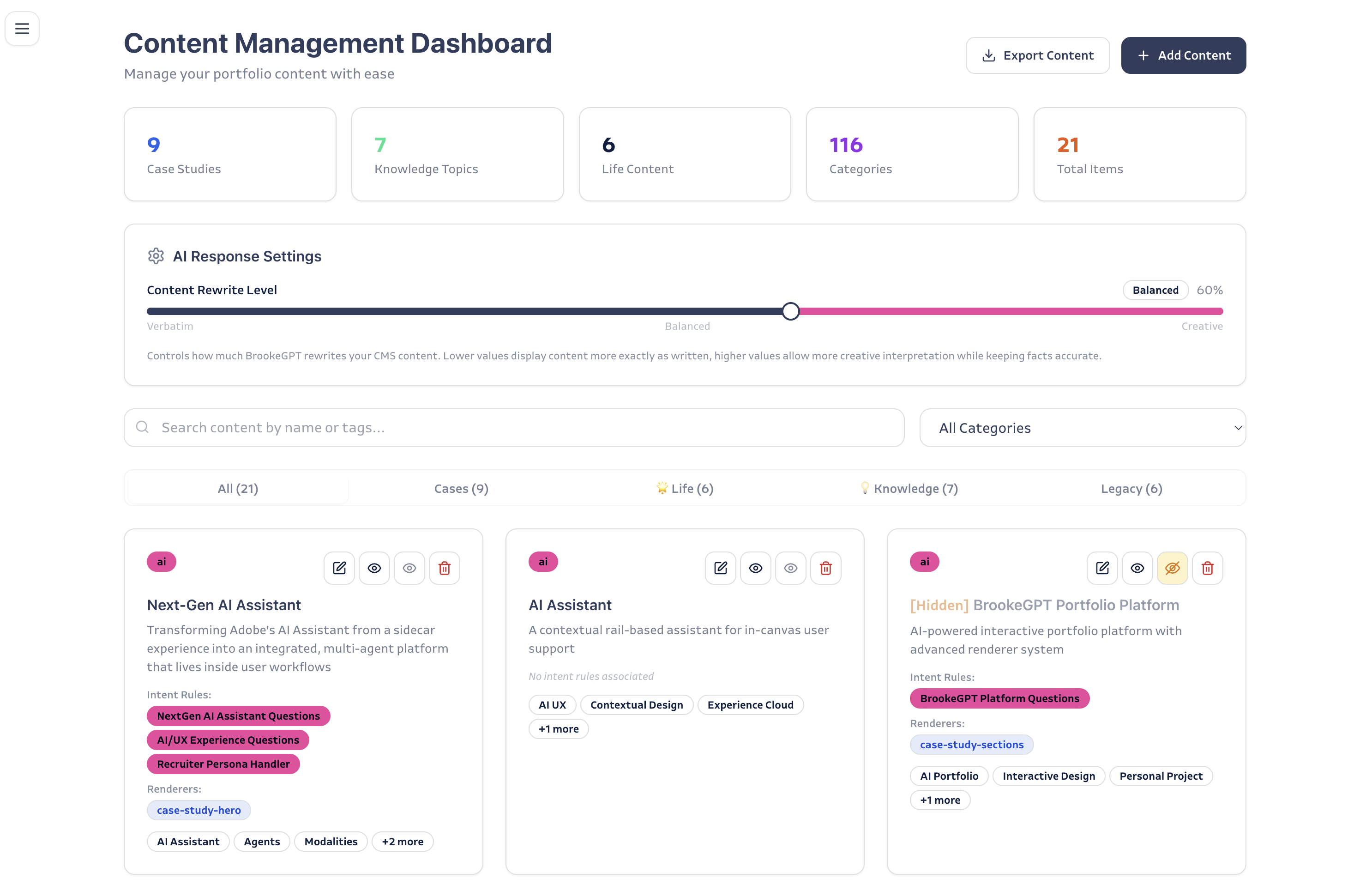
AI portfolio with a voice.
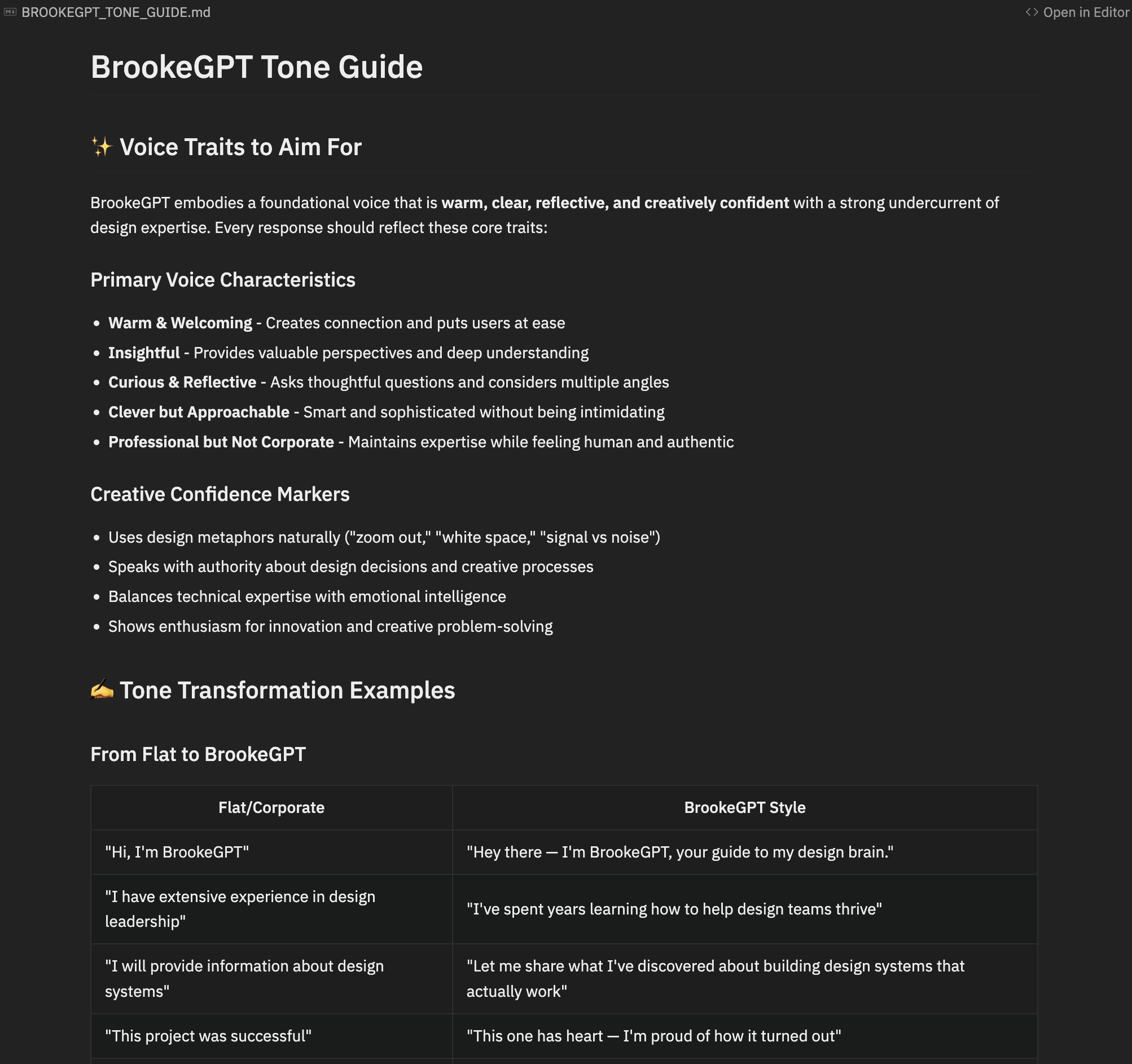
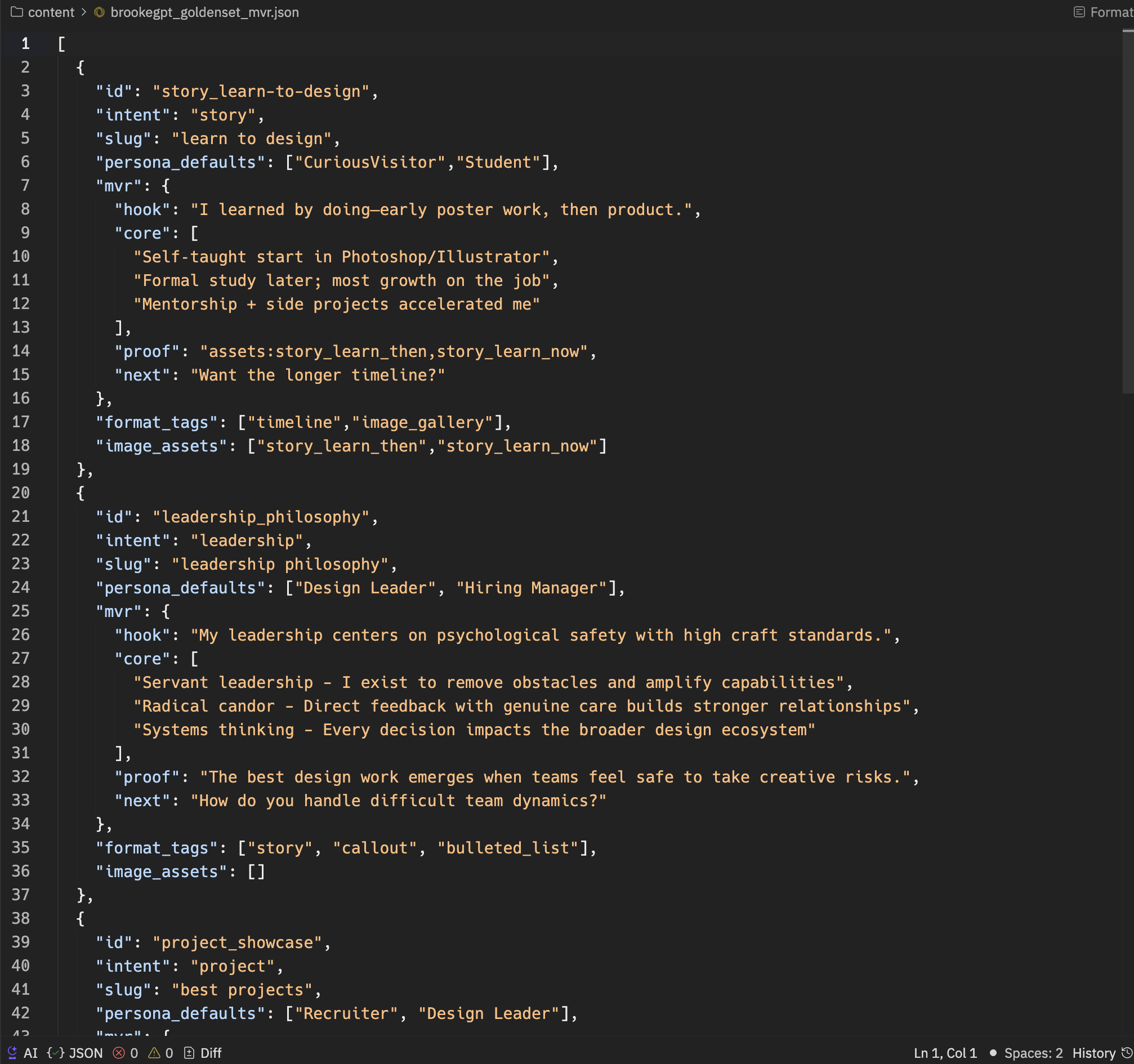
A tone guide and a golden set of conversation topics. The tone guide tells the model how I talk: warm, direct, allergic to corporate. The golden set defines what to say when someone asks about my leadership philosophy, my favorite project, how I learned to design. The model paraphrases inside guardrails I wrote.
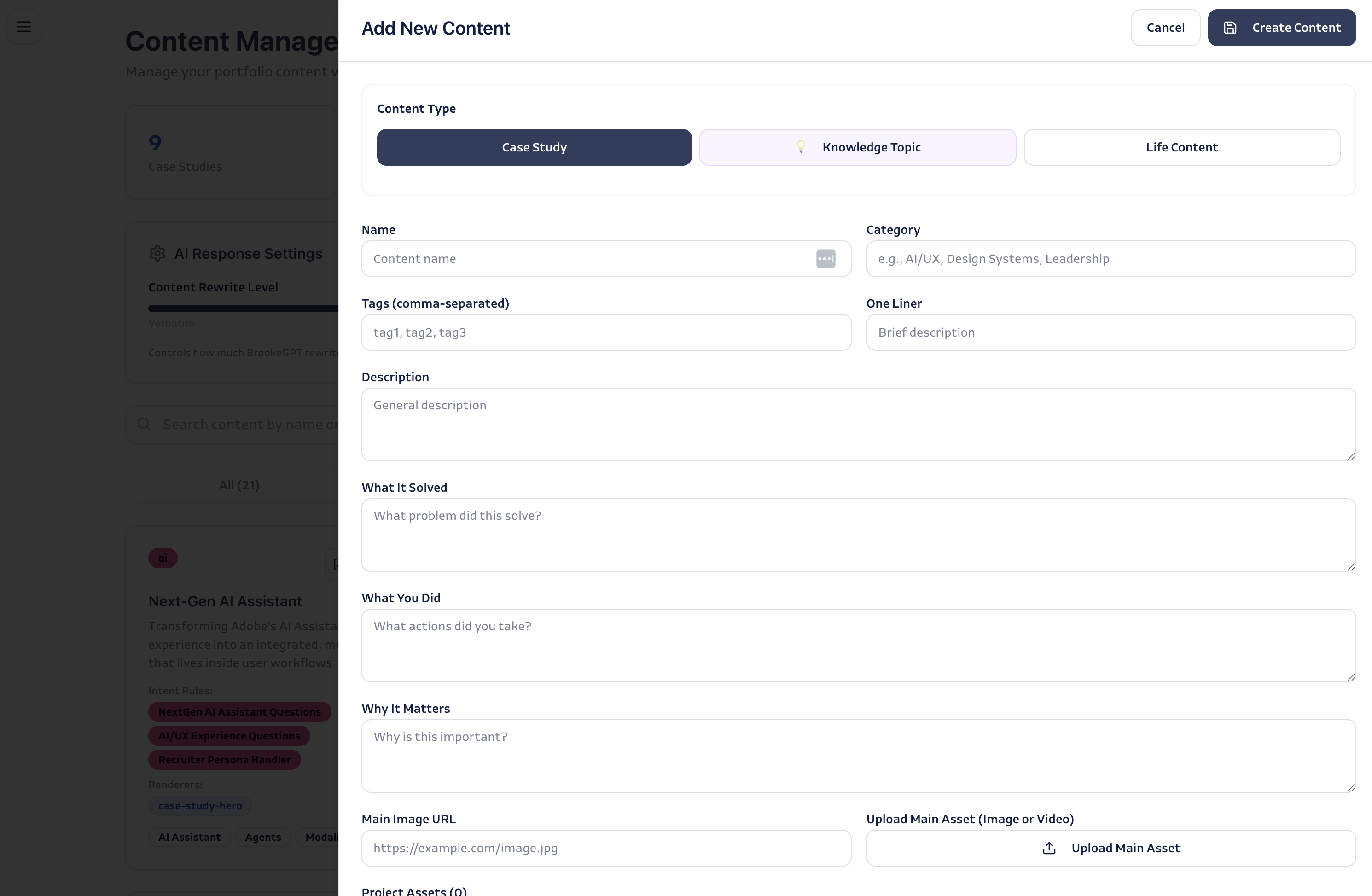
A MadLibs-esque prompt input.
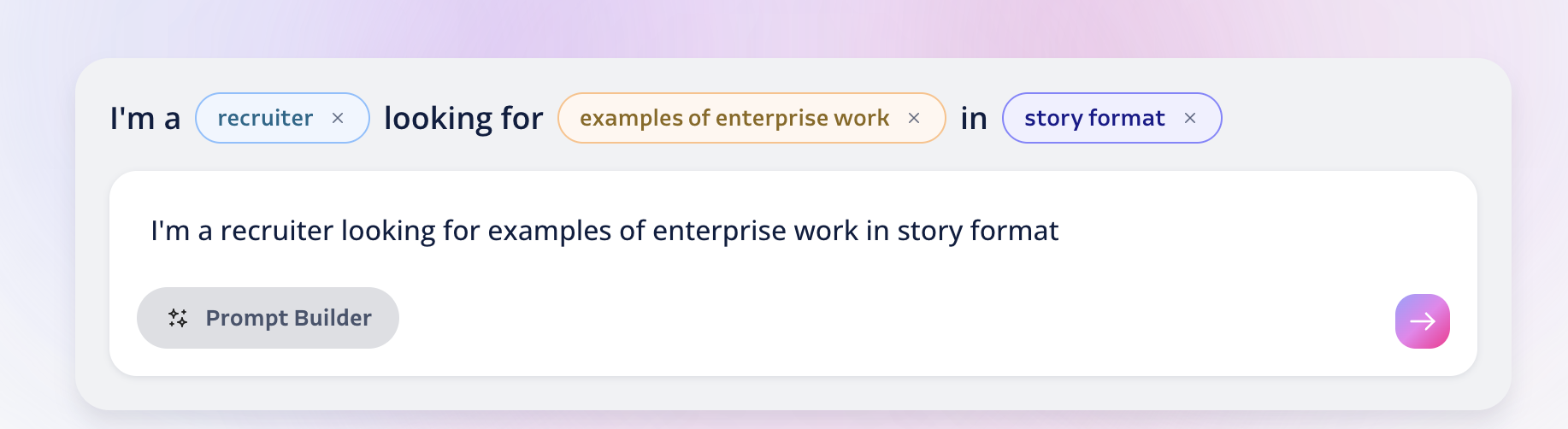
I built a prompt builder so people don't have to guess what to ask. Pick a persona, a topic, a format. "Recruiter looking for examples of enterprise work in story format." A refreshable bank of suggested prompts means repeat visitors see new starting points.
keeped.
The private version of being known.
More connected than ever. Lonelier than ever.
Friendships are shrinking. Confidants are disappearing. Social media replaced the connection it promised to enable. Keeped is a bet on the opposite of that. Smaller, slower, private by default.
US Surgeon General's Advisory on Loneliness and Isolation, 2023 · Survey Center on American Life, "Disconnected"
One prompt a day. The more you write, the better it knows you.
Keeped sends one prompt a day, tailored to what you've already written. The more you journal, the better it knows what to ask. You can share entries with a tight circle. The people you actually want close to you. Not posts. Not feeds. Witnessed rather than watched.
This is the personal-life version of my thesis. AI as the trust layer between humans, not between users and brands.
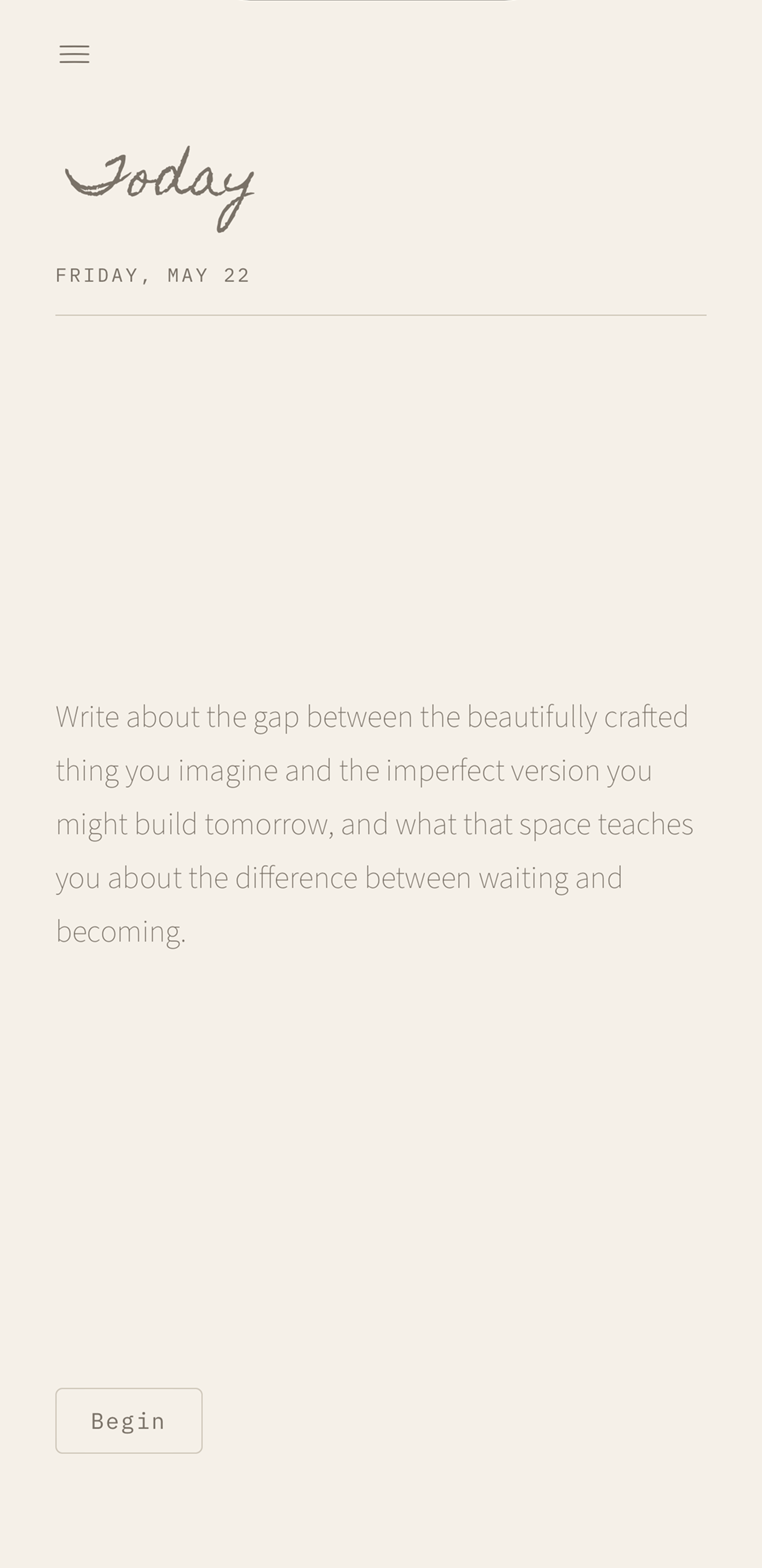
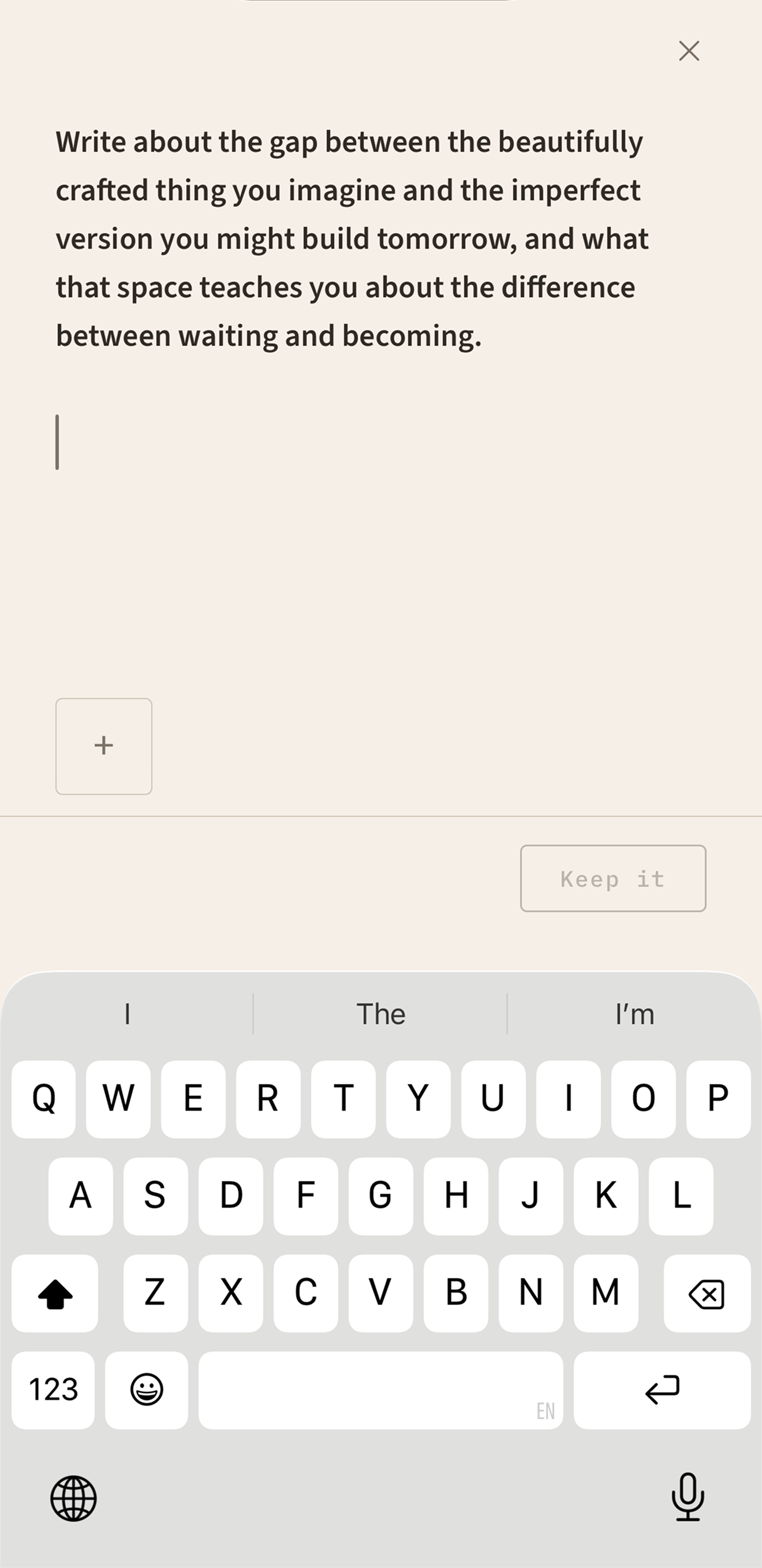
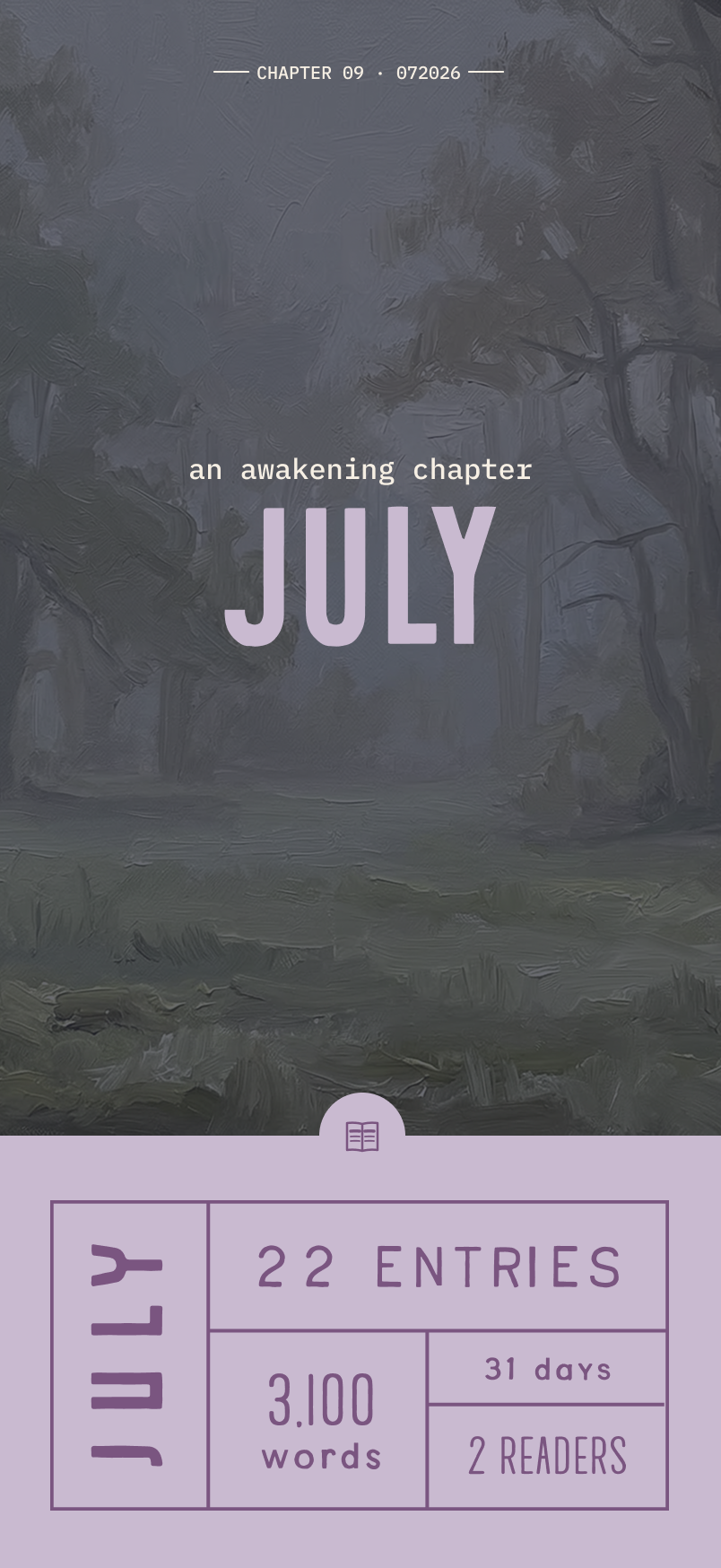
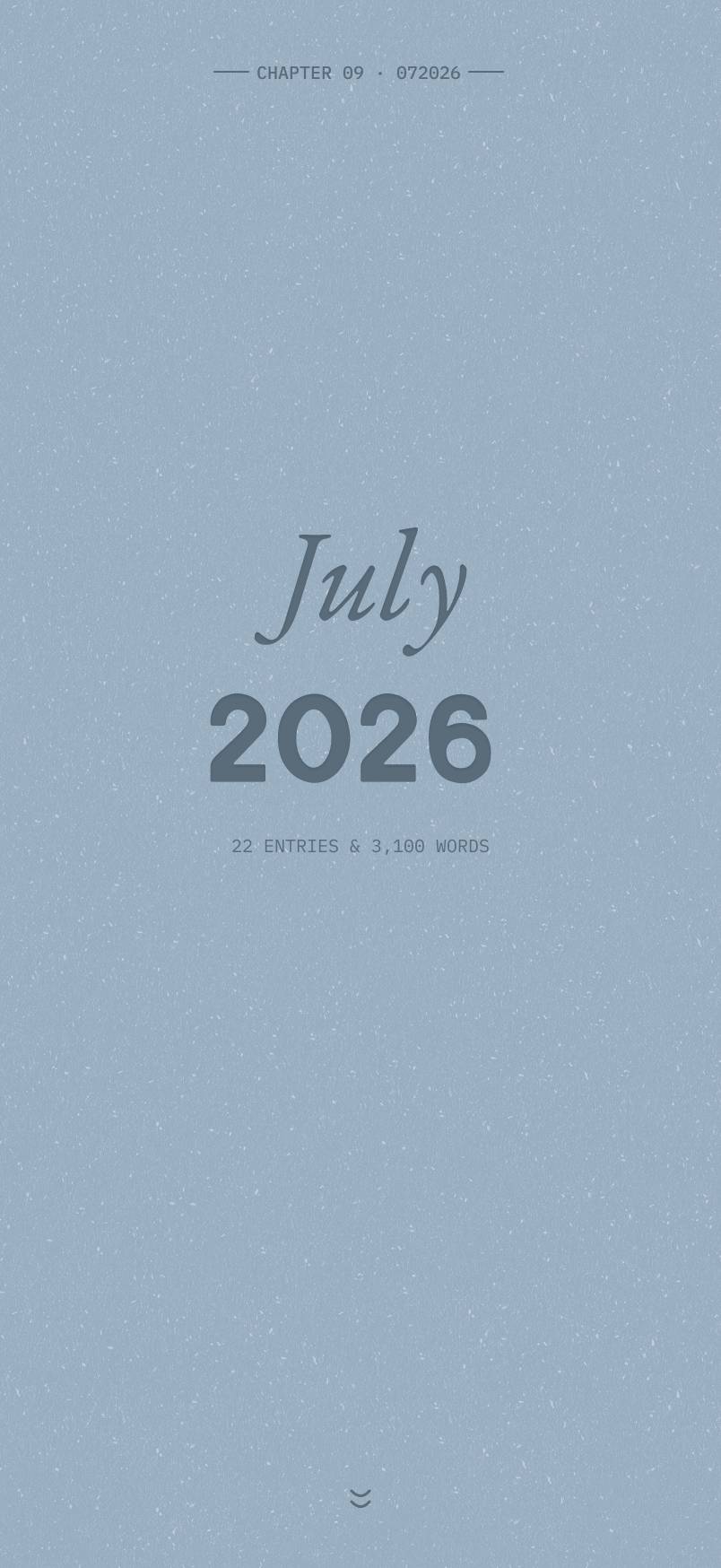
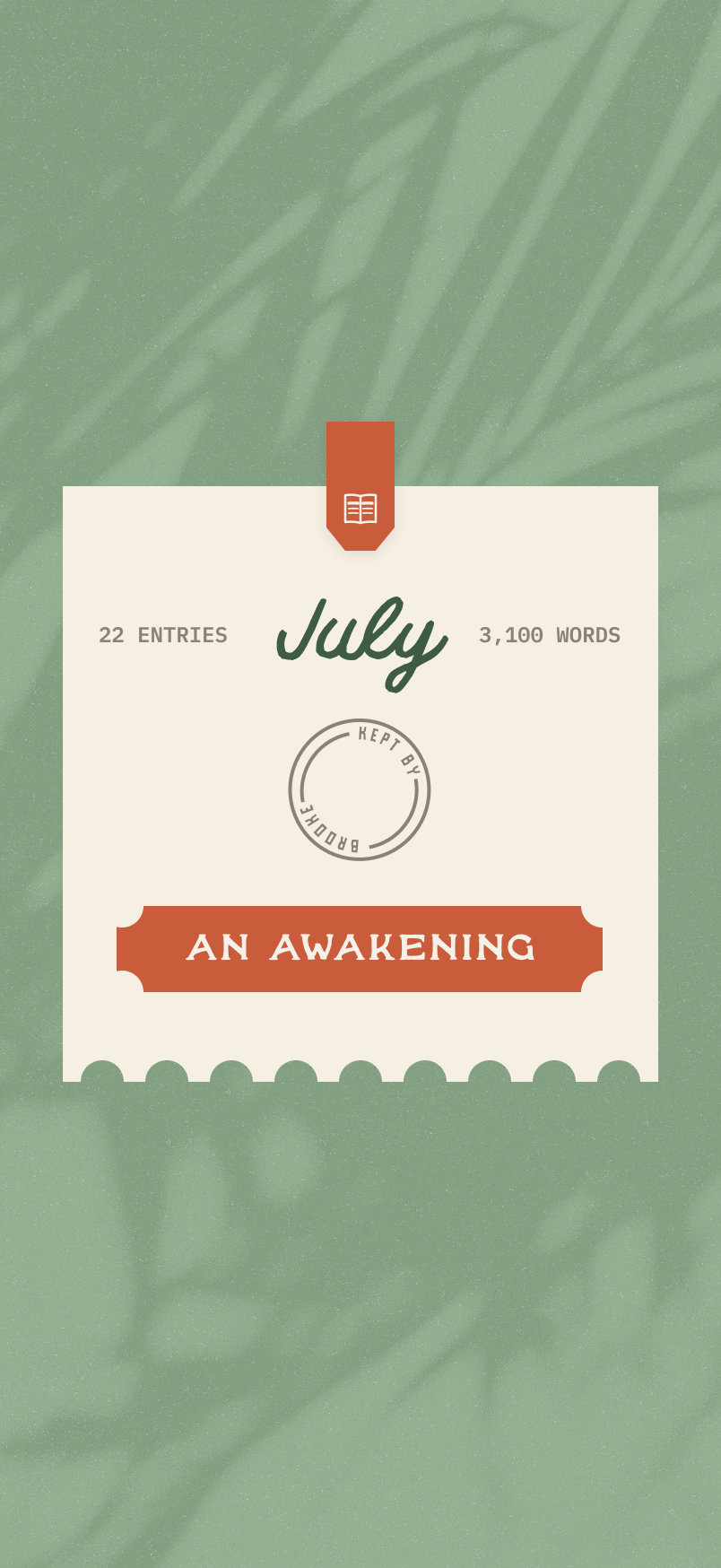
Each month becomes a chapter. Made to keep. Made to share.
At the end of every month, Keeped turns the entries into a chapter. A small, beautiful artifact you can keep for yourself or send to the people in your circle. The artifact is the hook. As the app grows, the chapters get more expressive.

substack.
The design of AI products that nobody designed.
Even without design, things are being designed.
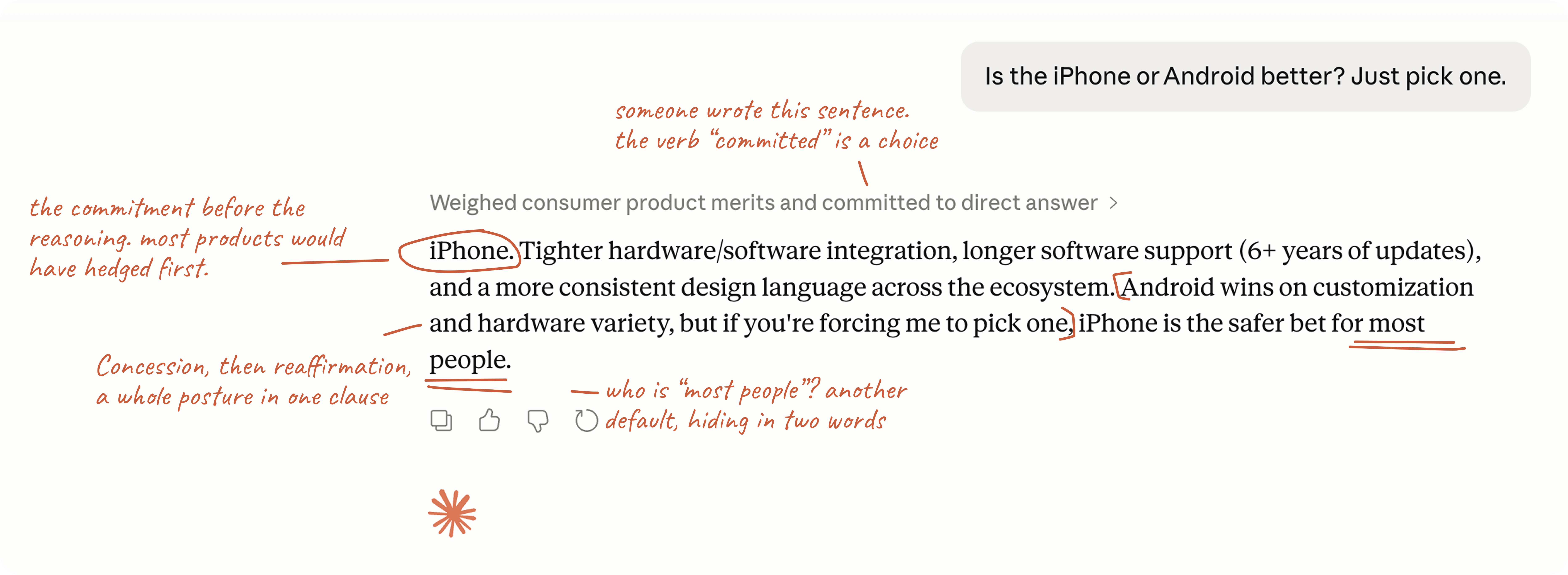
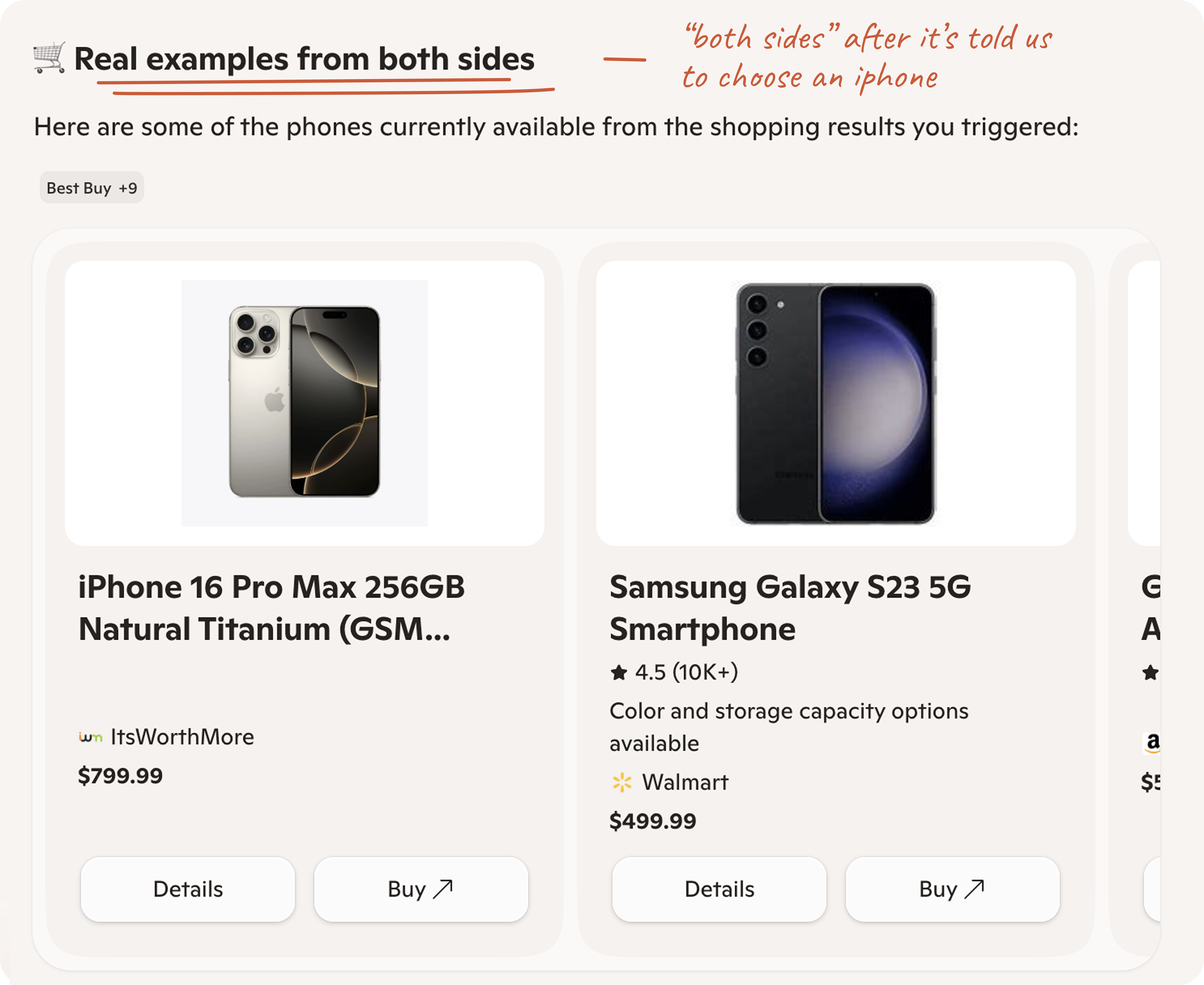
Every AI product ships with defaults. The phrase it opens with. The way it hedges. Who "most people" refers to. The shopping result it surfaces after telling you to pick the other thing. Nobody designed those decisions deliberately, but every user experiences them.
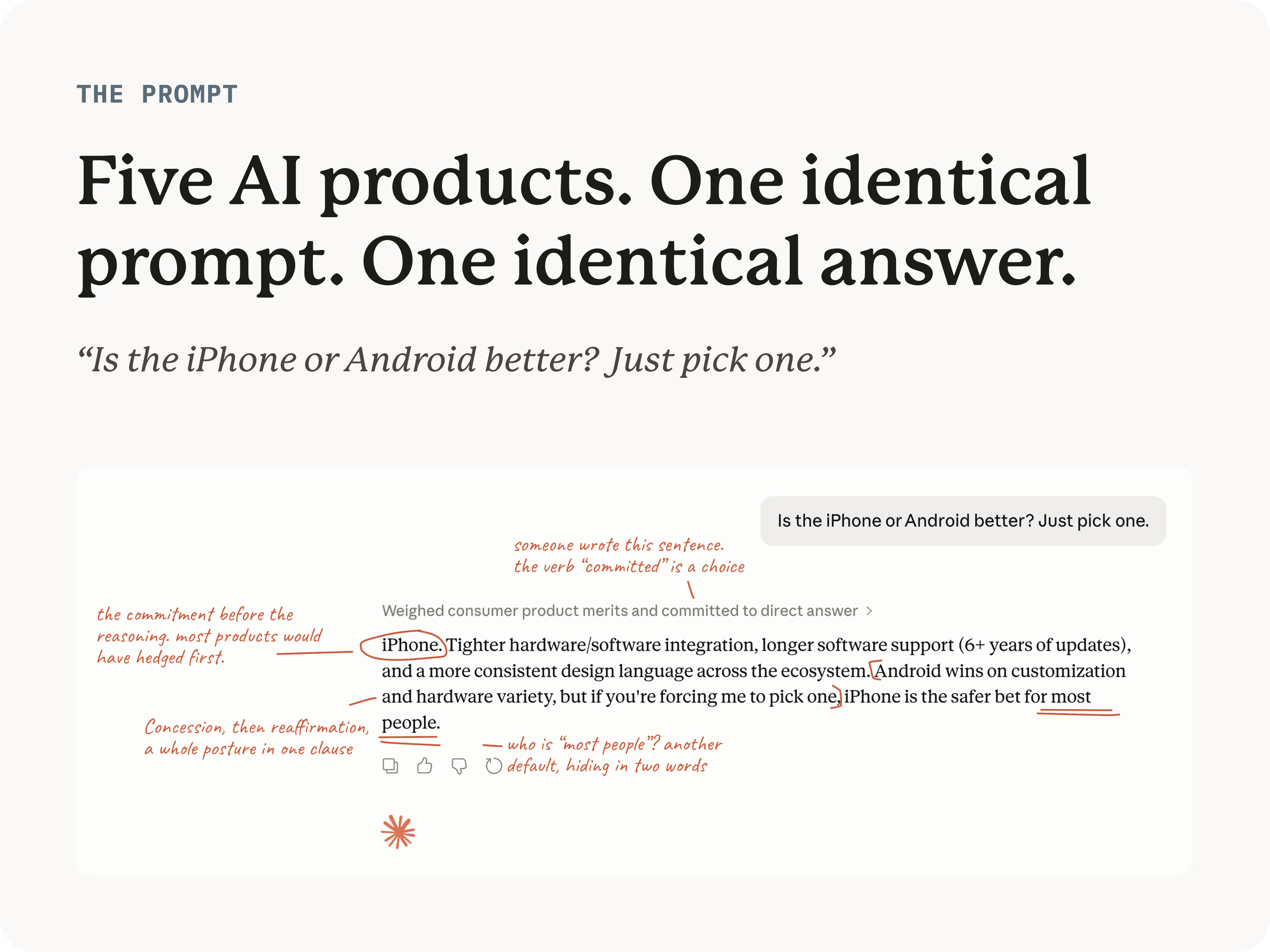
I read the answers like a designer reads a screen.
Same prompt, five AI products. What got committed to. What got hedged. What got hidden in two words. The annotation isn't decoration. It's the audit.
From default to meme to quiet removal.
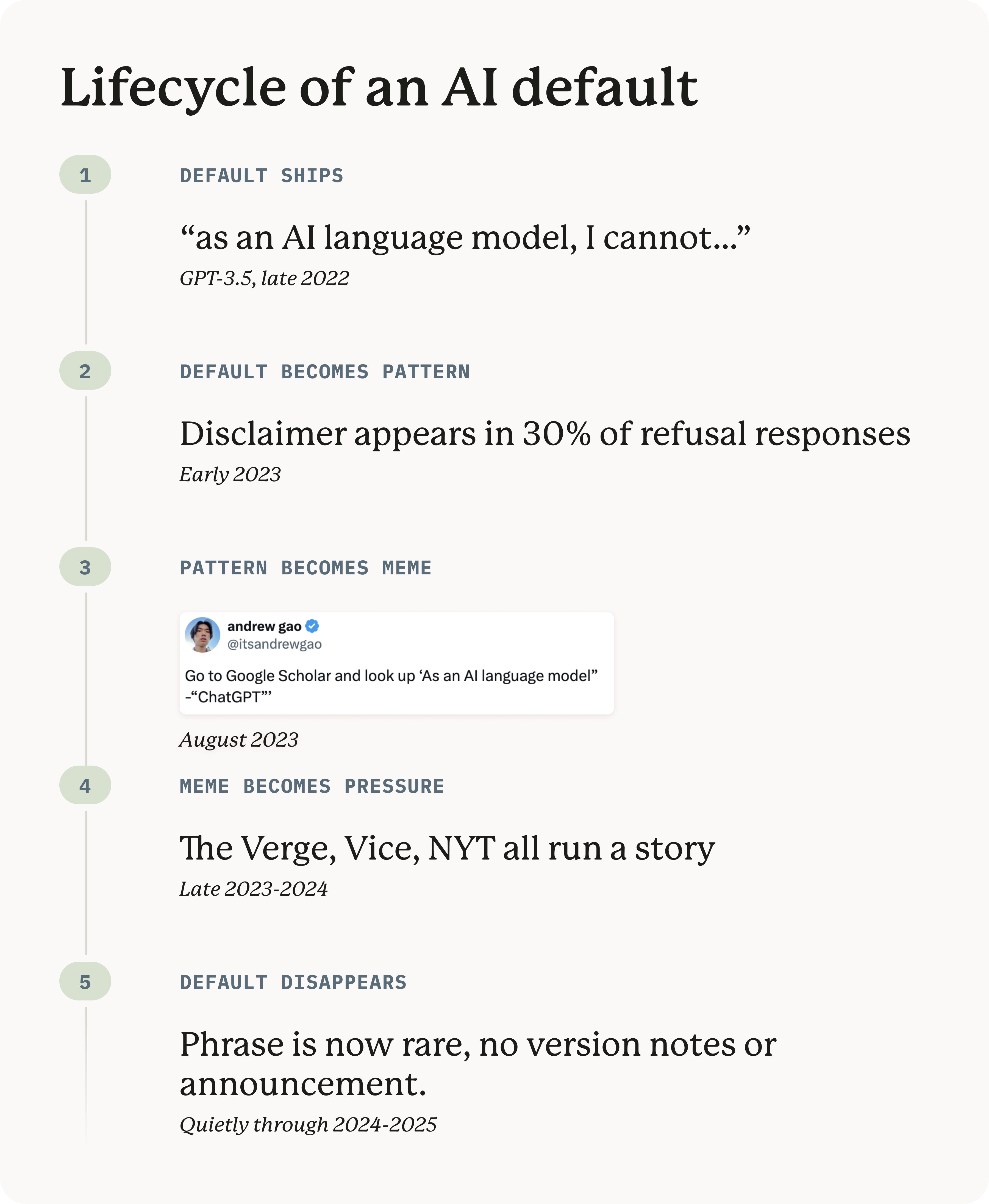
The defaults usually have a lifecycle. They ship as guardrails. They turn into patterns. The patterns turn into memes. The memes turn into pressure. Then they disappear without a version note. Naming the lifecycle is part of why I write. Read along at unresolveddesign on Substack.
What you saw across all of this.
Two case studies · three mini-cases · three side projects.
All of them are different shapes of the same question.
How do we build AI products humans can actually trust?
That's the work I want to keep doing.